Week 3 Constructed realities
“Construct means to build or make by putting together various parts. A constructed photograph is one that is formed by bringing together discrete elements to create a final piece” (Smith & Lefley, 2016 P113)
Chose 3 photographs that interest you regarding multiple interpretations of the world & ‘constructed approach’
- Record the manner of their constructed nature
- Identify why you read them
- Position your own practice both aesthetically & conceptually
http://pro.magnumphotos.com/Asset/-2K7O3R5XSCX.html
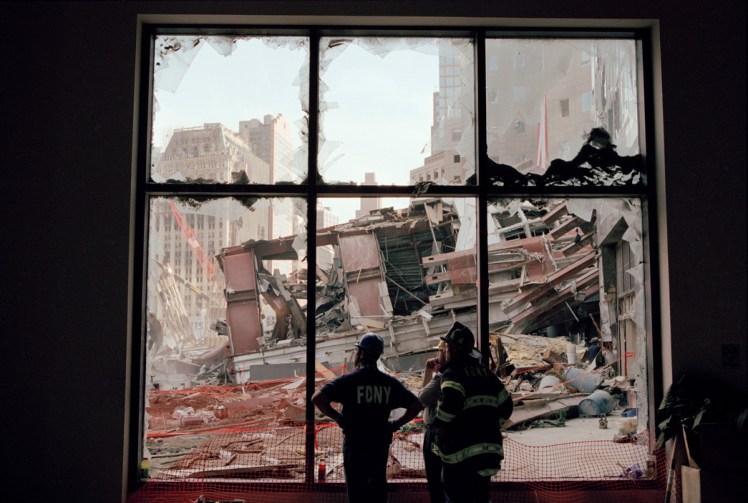
Eli Reed- USA. New York City. September 12, 2001. Firefighters survey the wreckage of the World Trade Center through blown-out windows of a World Financial Center building.
There was a considerable amount of photojournalism coverage from 9/11 terrorist attacks but this particular image stood out for me because of the photographer’s interpretation of the aftermath. The way this image has been selected could represent how the rest of the world, much like the firefighters are surveying, maybe not just the physical damage but potentially the political consequences that will soon follow. Aesthetically the image has been selected to include a silhouetted frame, which draws us in to our personal looking window of the scene in front. The image uses the element of body language from the firefighters to convey added disbelief and mood.

http://pro.magnumphotos.com/Asset/-2K7O3RKN98HF.html
Moises Saman-LEBANON. Bar-elias, Bekaa Valley. June 13, 2013. A young Syrian refugee stands behind barbwire at a small lake next to a spring where refugees collect drinking water on the outskirts of the Al-Jarrah tent settlement in the Bekaa Valley.
For me this image represents a stereotypical refugee that we mostly see in the current media. The photographer’s use of barbwire and low angle has a symbolic meaning. Which could emphasise the hard, challenging environment in which they face. The photographer has also added an element of obscurity with only showing part of the boy’s face, which is intriguing. I think this image has been constructed to have political message, potentially along the lines of the increasing number of refugees, and their struggle with humanitarian rights, having no country and no belonging.
https://www.sugimotohiroshi.com/new-page-54/
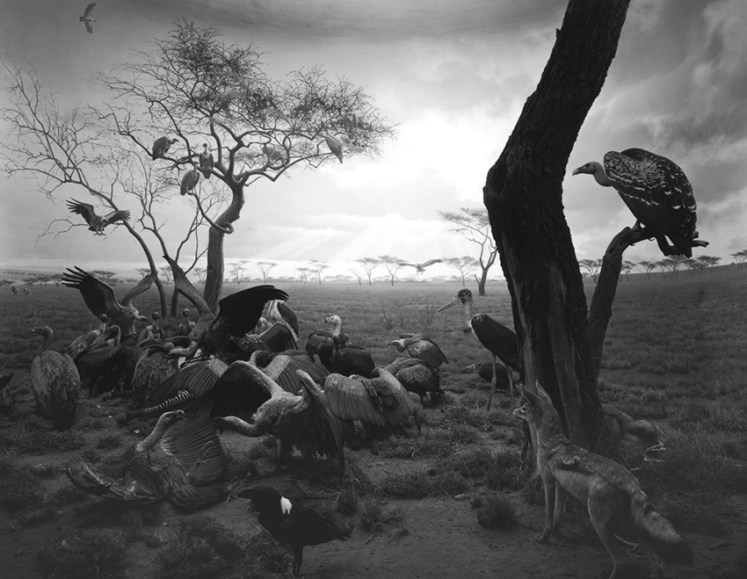
Hiroshi Sugimoto- Diorama, Hyena – Jackal – Vulture, 1976
This image featured in a presentation this week and I instantly found it interesting. As the photographer states that “It was asked whether photography could be art or not. The camera is a machine and the machine has no spirit. So photography makes machine-made paintings” (Sugimoto in Cue,2016). In his work from the Dioramas at first glance these natural world scenes may trick the viewer in thinking it is real but on closer inspection he has recorded the taxidermy within a museum. He has constructed an illusion with his camera, which questions the artifice and reality within the scene.
My practice
My practice has a more technological approach focusing mainly on the integrity of the scene. I try to capture the ‘truth’ of whatever is presented in front of me. This is important to me, I don’t feel my practice is held by the use of symbolic or representational ideas. The use of lightening and angles are used in only in a way to present as much current detail in the image as possible, to the viewer. Capturing previous military establishments is what makes these landscapes significant in their context. For me it is important to document these landscapes for a number of reasons, to commemorate, appreciate and archive history. I do feel it is still possible to achieve these ideas even if I constructed the image with a more representational view and not necessary ‘truthful’ image.
 Critical Research Journal